Design
Turn ambition into a testable mechanism, program, strategy, or learning experiment.
Powered by curiosity, OtterBots brings students, mentors, families, and community together to imagine more, learn faster, and build things that once felt beyond possible.
Every breakthrough begins with someone wondering, “What if?” Students bring the questions. Mentors share experience. Families create opportunity. Community gives ideas room to grow. Frontier tools help young builders explore farther while imagination, effort, and courage lead the way.
Big ideas become real through a simple rhythm: design, measure, analyze, improve, and control. Every attempt reveals something new. Every lesson becomes a stronger beginning for the next student.
Turn ambition into a testable mechanism, program, strategy, or learning experiment.
Capture timing, accuracy, reliability, behavior, constraints, and unexpected outcomes.
Compare evidence with the goal. Find the bottleneck, contradiction, or failed assumption.
Change one meaningful variable, test again, and retain only measured progress.
Make the improvement repeatable through feedback, documentation, training, and safe limits.
Students define the goal, make the decision, test the machine, and accept responsibility for the result. Mentors and Frontier tools expand what they can attempt without taking ownership away.
Microsoft Scout connects research, code, design tools, testing, and publishing so students can bring the right context into the moment they are solving a problem.
Our LLMWiki transforms sources, decisions, experiments, contradictions, and procedures into durable team knowledge. Every student inherits a stronger starting point and leaves one behind.
A robot does not move in abstractions. Mass, torque, traction, inertia, geometry, timing, and uncertainty all meet on the field. Digital Twins help students see those relationships sooner—and arrive at the physical robot with better questions.


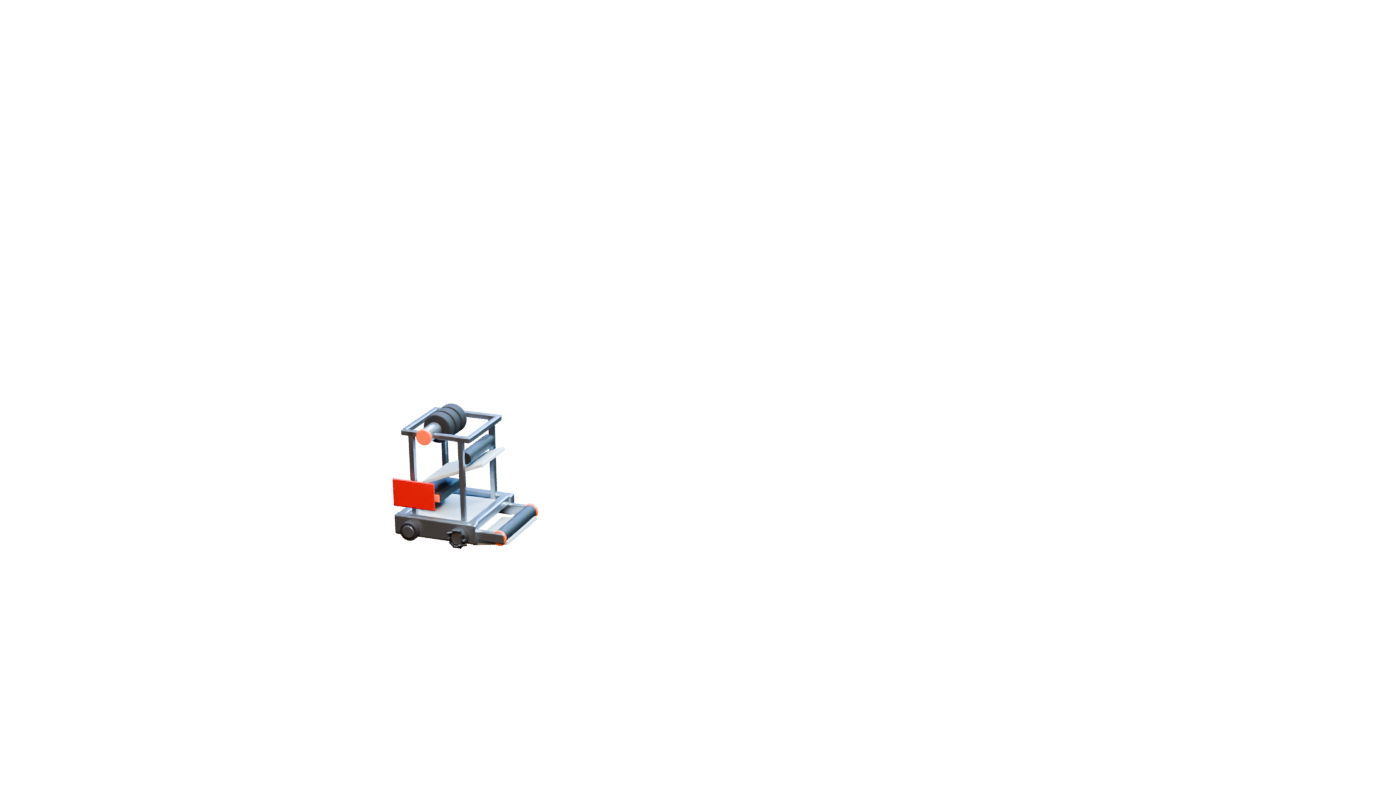
The separated layers reflect the way students reason about the system: the field defines constraints, the HIVE defines the scoring interaction, and the robot acts within both.
Geometry, travel distance, sightlines, traffic, scoring state, and alliance timing shape every mechanism.
Motor curves, gearing, mass, traction, inertia, launch geometry, and timing become testable hypotheses.
Simulation proposes. Testing decides. Every difference becomes another opportunity to learn.
Try something brave. Observe honestly. Keep what works. Learn from what does not. Mentors guide without taking ownership, and teammates challenge and support one another. The result is more than a better robot—it is a young person ready to learn, adapt, and lead through change.
Interactive diagrams, full comments, downloadable Blocks files, JavaScript, and student-friendly math explainers.
Visit Code Lab →02Engineering decisions, control systems, professional learning, community resources, sustainability, and student ownership.
See what we are building →03Use our Roblox Simulation to explore scoring cycles, traffic, parking, and alliance decisions.
Launch Roblox Simulation →Every choice becomes more valuable when students can explain what they tried, what they discovered, and what they will do next. Frontier tools help them move faster; the dream always belongs to the student.
student@otterbots:~$ season-loop
01 → Ask a precise question.
02 → Design and document alternatives.
03 → Test the Roblox Simulation and physical robot.
04 → Measure, learn, and iterate.
05 → Let every student explain the evidence.